
An MIS data quality checklist should cover source completeness, identity, enrolment, relationships and the process for resolving findings. Establish what data is available before interpreting missing values, and verify source corrections after the next complete refresh.
Is the imported data complete enough to assess?
Check the scope and freshness of an import before checking individual records. A missing contact collection may mean access was not approved, rather than that every learner lacks a contact.
Compare expected record coverage with the completed source snapshot. Record refresh failures and mapping limitations explicitly. If coverage is incomplete, retain the last confirmed result with its date and investigate the gap; do not report a clean result.
- Confirm the institution, school scope and active cohort.
- Check the last successful complete import and expected refresh schedule.
- Identify unavailable fields and unapproved collections.
- Distinguish an empty value from data that could not be collected.
Which identity and enrolment checks should we prioritise?
Prioritise fields needed by your institution’s processes and reporting obligations. Candidate checks include missing core identity details, repeated identifiers, implausible dates and contradictions between active or leaving status.
Apply the correct rules to the cohort. UPN checks designed for applicable English school pupils are not a universal college learner-identifier test. An age or year-group anomaly can be legitimate; review it before changing the record.
| Area | Practical review | Important limit |
|---|---|---|
| Identity | Missing details or repeated identifiers | A match does not authorise merging records |
| Dates | Impossible dates or contradictory chronology | Repeat admissions may need episode history |
| Enrolment | Active status and group assignment | Requirements vary by institution and cohort |
| Contacts | Missing links and numbers needing review | Format checks do not establish reachability |
How should contact and address findings be reviewed?
Review contact relationships as well as the values themselves. A populated telephone field does not establish that staff should call that person for a particular learner or situation.
Use address and postcode checks to identify records requiring attention. A postcode matching a reference release does not verify that the learner lives at that address. Confirm uncertain information through an authorised institutional process.
Read next: Review safeguarding contact data
How should we record exceptions and verify fixes?
Give findings an owner, a review decision and an agreed next step. Retain the reason for an accepted exception and set a review date, particularly when the circumstances are expected to change.
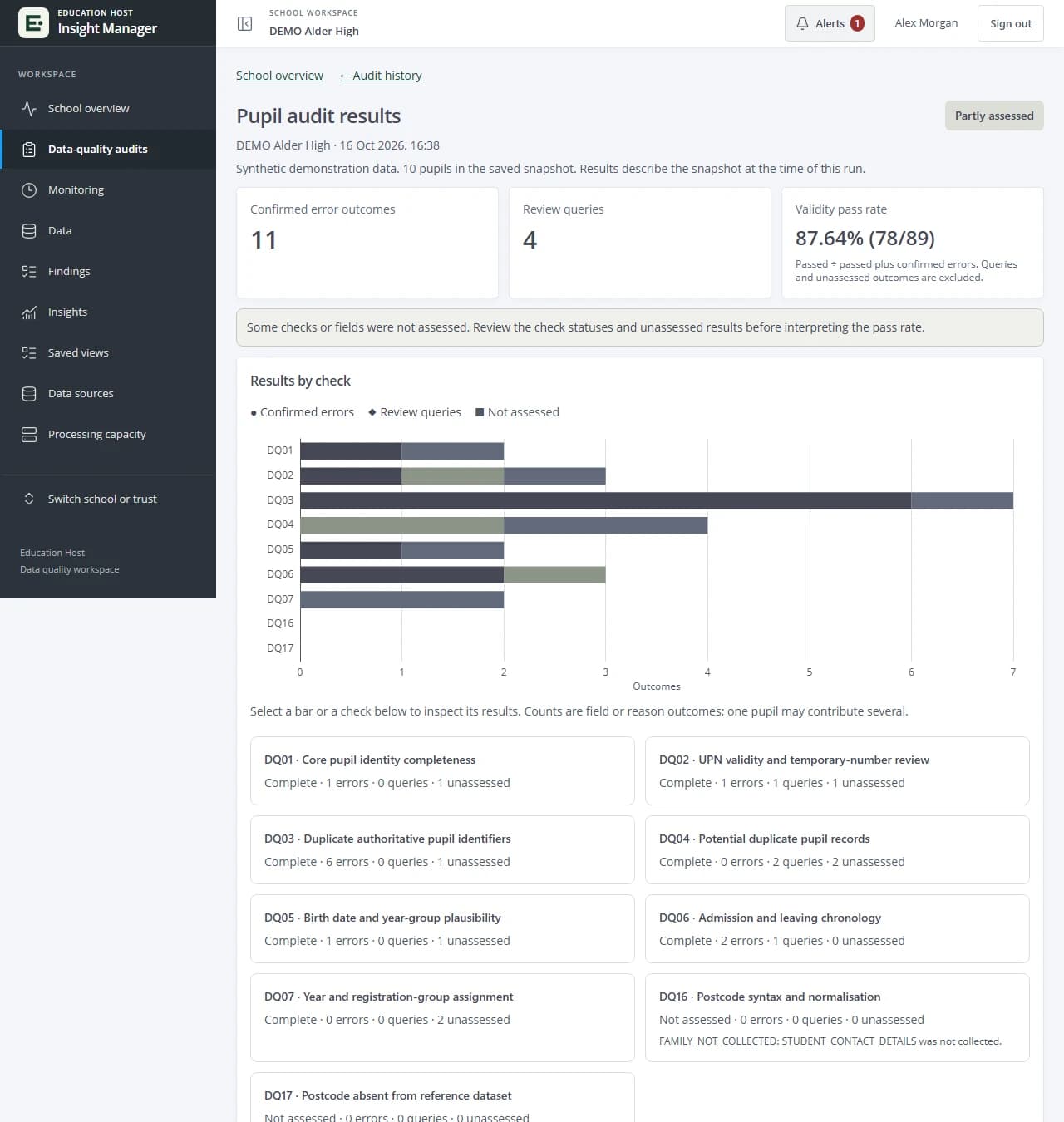
After staff correct the source, compare the relevant later complete data with the original finding. Check the same cohort, field and rule before claiming improvement. Education Insight Manager supports this workflow through assigned findings, correction tasks and retained evidence.
Does this replace school census validation?
No. This checklist supports the quality of underlying records; statutory-return preparation still needs the institution’s applicable official validation and review process. In England, school census returns are statutory for schools within scope.
Agree which checks are available for your data connection. A college should separately establish its learner mappings and ILR validation process rather than assume school checks cover every college requirement.
Read next: DfE: statutory school census requirementsReview college learner data