Education data quality means knowing whether the information used by your institution is complete, consistent, current enough for its purpose and supported by a clear source. A useful assurance process connects checking with investigation, correction and evidence that action has worked.
Where should leaders start with data quality?
Start with a decision or process that depends on reliable information. Contacting a family, identifying a learner correctly and preparing a return each require different checks; a single overall score cannot establish that every use is safe.
Ask the relevant team to identify the source of record, who updates it and what would happen if it were wrong. Choose a small set of priority questions, then agree the records, fields and school scope needed to answer them.
- Name the operational decision the check supports.
- Identify the authoritative source and accountable owner.
- Agree the expected cohort and when data must be refreshed.
- Set a review route for exceptions and unresolved issues.
Why does an MIS still need a data assurance process?
An MIS can hold the authoritative record and provide useful validation while leaders still need evidence of follow-through. The assurance question is whether findings are investigated consistently and whether their resolution can be demonstrated.
Keep existing MIS checks in the process. Add monitoring where repeated manual reports, disconnected spreadsheets or unanswered findings make it difficult to see progress. Software earns its place by improving that workflow, rather than duplicating an existing report.
Read next: Use the MIS data quality checklist
What should happen after a check finds a problem?
A finding needs investigation and an owner before it becomes an improvement. A suspected duplicate may reflect a legitimate enrolment arrangement, while an unusual date may have an explanation. Keep review queries separate from confirmed errors.
Record the evidence, due date and proposed action. Correct the authoritative source through the agreed process, then use a later complete import or other appropriate evidence to verify the result. A task marked complete is not sufficient evidence that a source record changed.
| Stage | Evidence to retain |
|---|---|
| Identify | Rule, source, snapshot and affected records |
| Investigate | Owner, decision and any justified exception |
| Correct | Source action and responsible team |
| Verify | Later complete data and matching outcome |
What should governors and trustees see?
A leadership report should explain coverage, priorities and unresolved risk alongside the trend. Show which sources were current, what could not be assessed and which actions are overdue.
Use aggregates for routine governance reporting and provide sensitive record detail only where necessary and authorised. A smaller count can reflect a reduced cohort, missing source access or a changed query; explain those changes before presenting them as improvement.
Read next: Plan trust-wide data assurance
How can Education Insight Manager support the process?
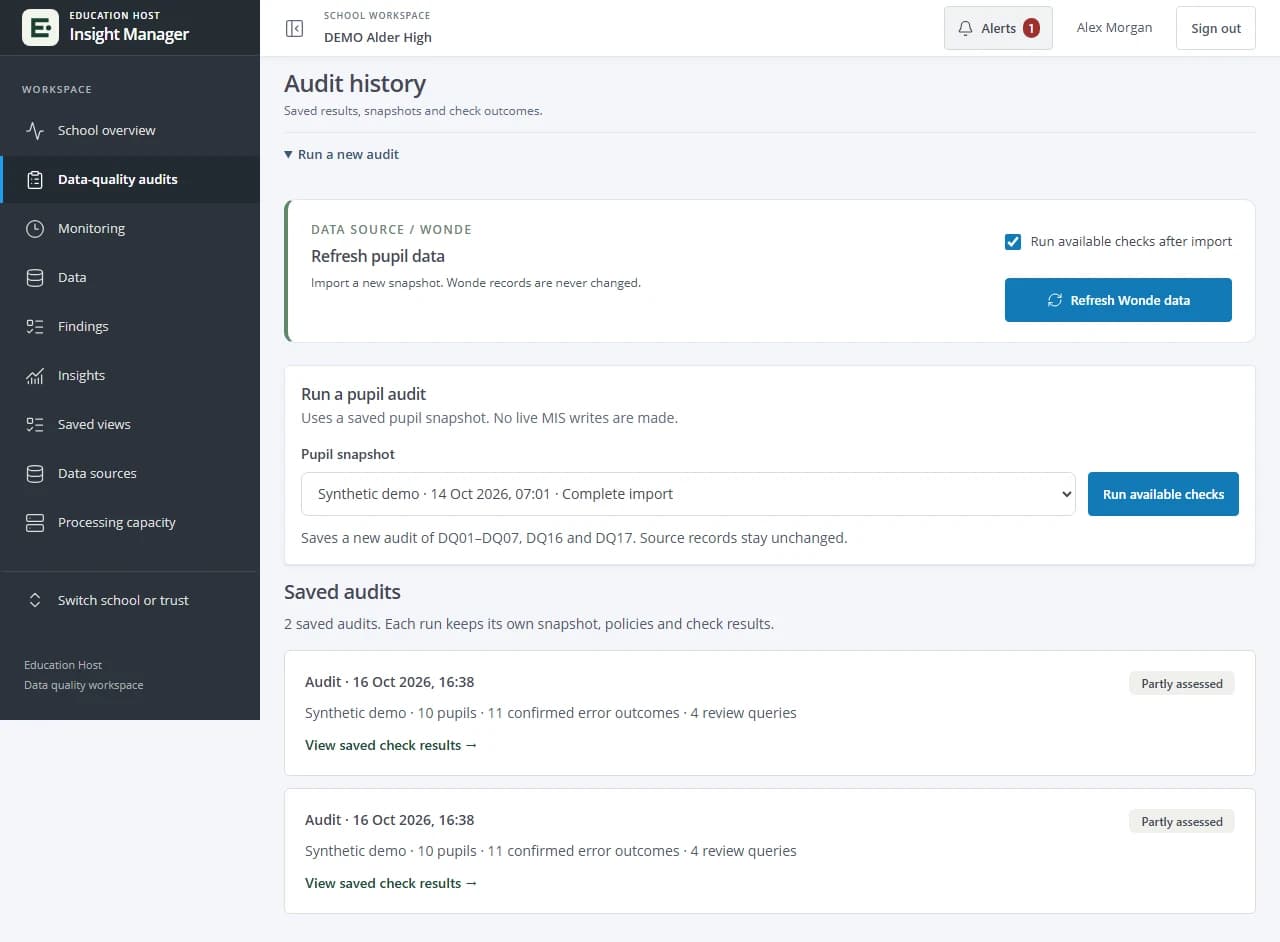
Education Insight Manager brings available checks, saved issue views, ownership and later-import verification into a consistent workflow. Its MIS assurance package focuses on supported core records; wider data assurance adds agreed additional sources.
Use a demonstration to test one real institutional question from source coverage through to resolution evidence. Agree mappings, permissions and production setup before relying on a workflow. The platform supports compliance work; responsibility for institutional decisions remains with the institution.
Read next: Compare the two assurance packages